
How Often Should You Publish a Podcast?
"How often should I publish?" is one of the most common questions I get
Should I publish weekly, fortnightly or monthly?
A few years ago, my answer would almost certainly have been weekly. That was the norm. It was what everyone seemed to be doing, and what most new podcasters assumed they should do too.
These days, my answer is a little different.
You should publish at the frequency you have capacity for. Not what you think you should do or not what the "normal" publishing schedule is assumed to be. But what you actually have space for in your business and your life.
Because podcasting will consume your life if you let it.
Most people underestimate the work
That might sound dramatic, but after working with podcasters over the last six years, I've seen how easily it happens.
Most people underestimate how much work there is to do in the background of a podcast. They think about recording the episode but they don't always think about planning topics, finding guests, co-ordinating schedules, writing episode descriptions, publishing episodes, promoting them and managing all the other wee tasks that crop up.
Then there's the mental load.
If you're a business owner, you're probably already thinking about your business while you're driving or standing in the shower. A podcast becomes another layer of that. You'll suddenly find yourself collecting episode ideas while making dinner or thinking of potential guests while scrolling LinkedIn. And then suddenly realising at 10pm that you haven't planned next month's content.
None of these things take huge amounts of time individually but together, they all add up.
That's why I think it's important to choose a publishing schedule that fits the reality of your business, not the version of your business you hope to have one day.
Why I often recommend starting monthly
When someone is launching a podcast for the first time, I often recommend starting with a monthly schedule.
Not because monthly is somehow the ideal frequency, but because it gives people a chance to see how podcasting fits into their business before committing to a more demanding schedule.
The good news is that nothing is set in stone. If you start monthly and discover you have capacity for more, you can always move to fortnightly or weekly later.
If you already have support from a VA, copywriter, podcast manager or other team members, you might have the capacity to publish more frequently from the beginning.
The right answer depends far more on your circumstances than it does on the latest industry advice.
I also recommend launching with a trailer and at least three episodes. If someone discovers your podcast on launch day, they then have something to listen to past a single episode. It gives new listeners a chance to get invested in the conversations and look forward to what's coming next.
Weekly podcasts can absolutely work
I'm not saying weekly publishing is a bad idea at all.
One of my long-term clients, Dr Robin Owens, has published weekly since the very beginning. As I write this, we're up to episode 287 without missing a single week.
Her episodes are generally between 20 and 30 minutes long. Whether she's recording a solo episode or interviewing a guest, this format fits comfortably into her business and her life.
That's one of the reasons it's been sustainable for so long.

I've also worked with a client whose podcast started as a weekly show. Over time, that shifted to fortnightly and eventually monthly as her available time and energy changed.
The podcast didn't fail. It adapted to her available energy and I think that's a very important distinction.
The difference isn't that one publishing schedule was right and the other was wrong. Both podcasters found a rhythm that worked for them.
That's the lesson I keep coming back to again and again.
The best publishing schedule is the one you can still maintain after the excitement of launching your new show has worn off.
Frequency isn't the only thing that matters
The format of your podcast plays a huge role in how sustainable it becomes.
One of my newer editing clients publishes monthly guest interviews. That sounds quite manageable on paper until I tell you her episodes regularly run for around one hour and thirty minutes.
She warned me during our discovery call that her episodes were long and she wasn't exaggerating!
If you're recording, editing, publishing, promoting and managing everything yourself, that's a significant amount of work attached to every single episode.
What's interesting is that she already had years of audio and video editing experience so the challenge wasn't that she didn't know how to do it. It was finding enough time to keep doing it consistently.
As she told me,
"I thought that I could make a podcast by myself. I had years of experience with audio and video editing. What I discovered, however, was doing it myself ground my podcast to a halt. Working with Lynda has given me the freedom to concentrate on the joy that the podcast brings me."
That observation stands out because knowing how to do something and having the capacity to keep doing it are two very different things!
The podcasts that last are often simple in their structure
It's one of the reasons I generally recommend keeping episodes shorter, especially when someone is starting out.
Most of the podcasts I've seen sustain themselves long term tend to have focused conversations and a base structure with some allowance to be flexible. These types of episodes don't require hours and hours of editing.
I usually recommend aiming for around 20 to 30 minutes and using a simple list of questions or talking points for guest interviews. It keeps the conversation moving and reduces editing time. It also makes it much easier to batch record episodes.
Batch recording is one of the biggest advantages a podcaster can create for themselves.
When you're able to record multiple episodes in a single session, you're no longer constantly chasing next week's deadline. You create breathing room and you can get ahead of your schedule. The podcast then starts working with your life rather than against it.
Do listeners actually care how often you publish?
One thing I don't think gets talked about enough is that listeners probably care less about your publishing schedule than many podcasters assume.
Personally, I discover most podcasts through recommendations, newsletters, communities and other people I trust. Once a podcast is in my library, I'm usually choosing episodes based on the topic rather than how recently they were published.
If I've only got half an hour available, I'll scroll through the episode titles looking for something relevant or interesting. If the title clearly tells me what the episode is about, I'll probably listen. If it's vague, I'll often skip past it and choose something else.
That's why I think episode titles matter more today than they used to.
Publishing consistently is still important, but people need a reason to click on an episode in the first place.
So, how often should you publish?
When someone asks me how often they should publish, my answer is still the same.
Publish at the frequency you have capacity for, not what you think you should do and not what someone else is doing.
Choose a schedule that fits your business, your life and your energy.
A monthly podcast that is still running three years from now will achieve far more than a weekly podcast that quietly disappears after six episodes.
Your goal should be to create a podcast you can keep.
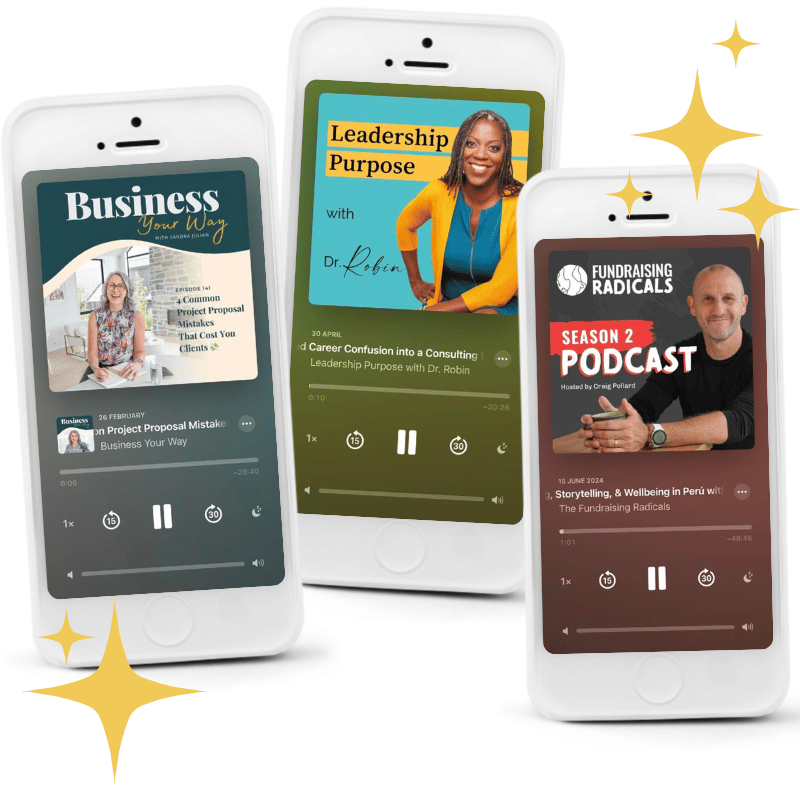
Thinking about starting a podcast?
If this article has highlighted how many decisions you're going to have to make if you're starting a podcast, know that you're not alone.
Before you worry about publishing schedules or microphones and recording software, spend some time getting clear on the foundations.
The Podcast Clarity Map will help you think through your audience, message, capacity and how a podcast fits into your business. If you decide podcasting IS the right fit, then the Pre-Launch Podcast Planner is the next step for turning those ideas into a practical launch plan.
Start with the Podcast Clarity Map for $7 usd.
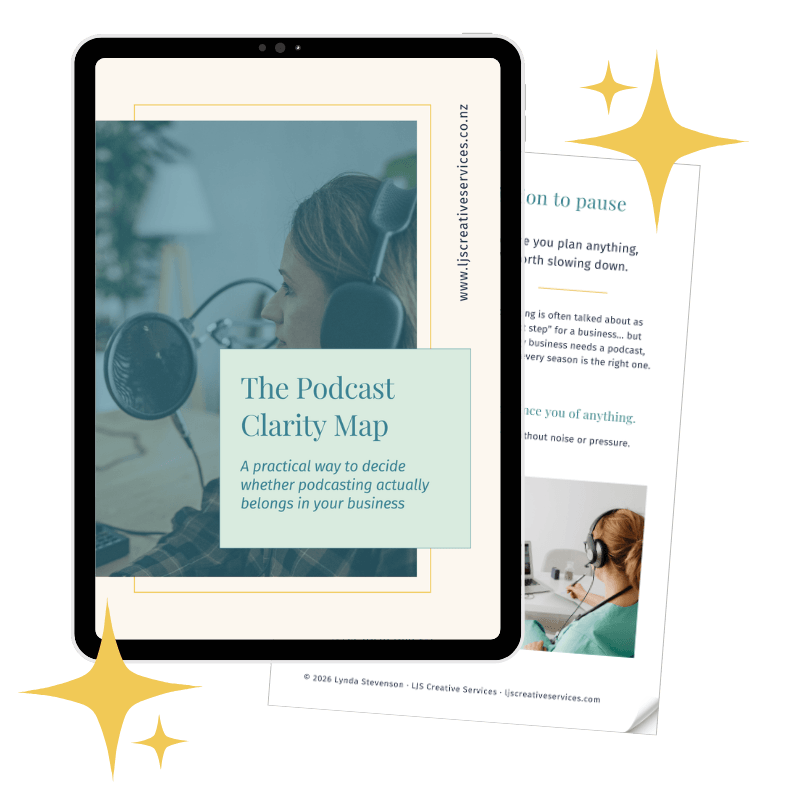
Still wondering whether a podcast is right for your business?
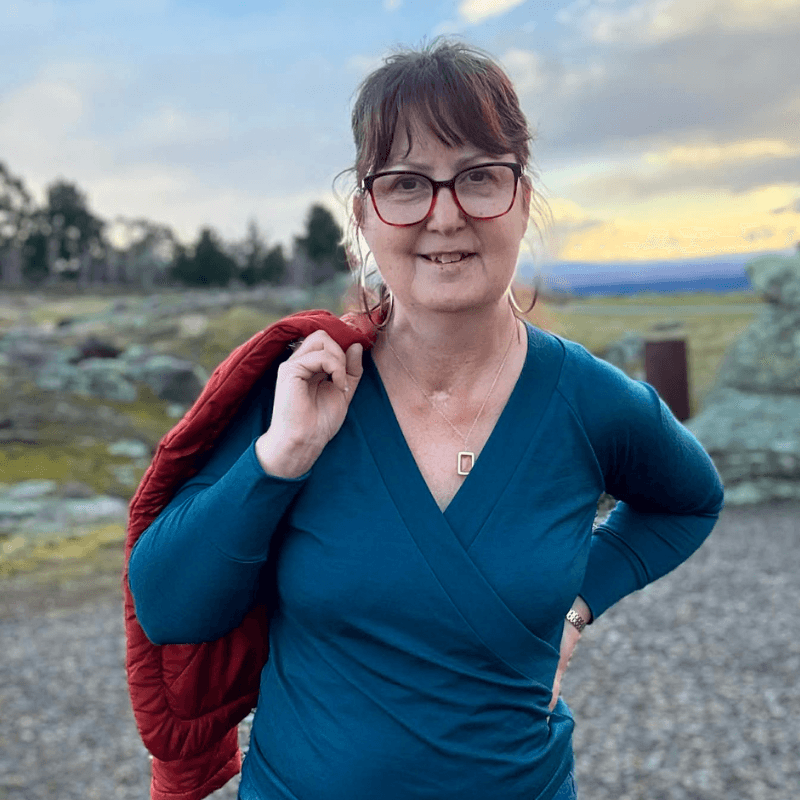
Hi, I'm Lynda.
I've worked with enough podcasters to know that starting a podcast isn't the hard part.
Keeping it going is.
These resources are designed to help you make good podcasting decisions before you invest time, money, and energy into launching a show.



©LJS Creative Services 2026 | Designed By Zestful Media & Design
Supporting podcasters in New Zealand, Australia, the US and beyond.
Podcast Quiz → Is your business ready for a podcast?
Blog | Podcast Resources | Terms and Conditions | Privacy Notice