
What Do You Need to Know Before Starting a Podcast?
Start with the foundations
If you're thinking about starting a podcast, you've probably looked at microphones, recording software and podcast hosting platforms already. You might even have a microphone sitting on your desk already.
That's certainly been my experience. Almost everyone who comes to me wanting to launch a podcast has already bought the microphone. The microphone seems to be the strongest representation of "I'm starting a podcast", even before they've got any real idea about what they'll talk about or how the podcast fits into their business.
The interesting thing is that the microphone is usually the easy part.
After helping launch and manage podcasts for various business owners and organisations, I've found there are a few things that matter far more than the equipment you choose.
If you're thinking about starting a podcast, these are the things I'd want you to know first.
Start with clarity before you buy equipment
If someone asked me for the very first step in starting a podcast, my answer would NOT be to buy a microphone or choose a hosting platform.
I'd tell them to make decisions first on what they're creating.
One of the exercises I use inside my Podcast Clarity Map starts with questions like these:
What are the conversations I keep having with clients?
What is the thing I find myself helping people with most often?
What are the topics I could talk about regularly without running out of steam?
Many people think they need to have every detail worked out before they begin.
In reality, it usually starts as a direction to head in, not a fully formed plan. You don't need to know exactly what your podcast will become five years from now but you do need some kind of idea about why you're creating it and who you're hoping it will help.
Your podcast needs a job
One of the first questions I ask new podcast clients is this, "What do you want your podcast to do?"
It's not enough to simply talk about your topic or area of expertise. Yes, that's part of it, but your podcast needs to lead somewhere.
That destination might be your services, your email list, a book, a speaking career, a membership, a fundraising initiative or a larger mission you're working towards. The exact destination will be different for everyone, but there needs to be one.
One of the best examples of this is a client I work with, Dr. Robin L Owens and her podcast Leadership Purpose with Dr. Robin.
Over the years, her podcast has evolved alongside her business. As her message has become clearer, so has the direction of her podcast. At the same time, she's been writing a book and developing a future membership for people seeking more purposeful careers.
The podcast didn't exist in isolation. It became part of a larger ecosystem.
Your podcast doesn't need to sell directly. But if it has no relationship to your work, it becomes very hard to justify your time.
Podcasting takes more time than most people expect
The biggest thing I see people underestimate is the amount of time involved.
Not just the editing. Everything!
Recording takes time. Planning takes time. Finding guests takes time. Co-ordinating schedules takes time. Publishing, promoting and managing the moving parts all take time as well.
If you're interviewing guests, you'll soon discover that finding a time that suits two busy people can sometimes feel harder than recording the episode itself!
Many people imagine podcasting as sitting down to have a conversation and hitting record. The reality is that every episode involves a lot of small tasks that all need to happen before the episode reaches a listener.
None of this is meant to discourage you but it's important to understand these things before you begin.
Build the podcast you can keep
One of my regular clients started her podcast with weekly episodes. Over time she moved to fortnightly episodes, and eventually to monthly episodes because her capacity for recording was exhausted.
Another client is still publishing weekly more than four years later. Whether she's recording solo episodes or interviewing guests, her episodes are generally between 20 and 30 minutes long. The format works for her, and because it works for her, she's been able to sustain it.
This is one of the biggest lessons I've learned through podcast management.
I'd much rather see someone start with a publishing schedule they can realistically maintain than launch with ambitious plans that become overwhelming six months later.
Consistency still matters. Your audience appreciates knowing when new episodes are available. But consistency becomes much easier when the format fits your actual life and business.
The people who last usually have support
The podcasters who continue year after year very rarely do everything themselves.
That support might be a podcast manager. It might be a VA who creates graphics. It might be a copywriter who writes blog posts and show notes. Sometimes it's a combination of all three.
One client who came to me had years of audio and video editing experience. She absolutely had the technical skills to produce her own podcast.
What she discovered was something different, and as she put it,
"What I discovered, however, was doing it myself ground my podcast to a halt. Working with Lynda has given me the freedom to concentrate on the joy that the podcast brings me."
I often think about that. Her challenge wasn't capability, it was capacity.
Podcasting becomes much easier when you can focus on the parts you enjoy and get support with the parts that drain your energy.
Consistency isn't the whole story any more
For a long time, I believed consistency was one of the biggest drivers of podcast growth.
I still think it's important, but what I think has changed is the role discoverability plays now.
Today there are millions of podcasts available. Publishing consistently helps your existing audience know what to expect but it doesn't automatically help new listeners find you.
Your episode titles matter. Your keywords matter. The language you use matters. People need to be able to find your content before they can listen to it.
And I've recently taken note of changes in my own listening habits. If content is rambling or takes too long to get to the point, I'm far more likely to skip it and find something else than I was a few years ago. I'm sure a lot of listeners are making those same decisions as well.
Good content is still the foundation. Being easily searchable helps people find your content in the first place.
Two things new podcasters worry about
The first is their voice.
Many people don't think about this until they hear their first recording and then they become convinced they sound strange. The truth is that everyone else already knows what your voice sounds like. You're the one adjusting to hearing it played back!
The second concern is running out of things to talk about.
This comes up particularly with solo podcasters. People worry they'll run out of ideas after ten episodes.
What I've found is that the best topics are often hiding in plain sight. They're the conversations you're already having with clients, or the questions people ask you repeatedly, or the challenges you're helping people solve every day.
If you're interviewing guests, every conversation brings new perspectives and ideas. The content often expands naturally as the podcast grows.
Why I still believe in podcasting
The projects that have stayed with me over the years all have one thing in common.
They're trying to make a positive difference.
I've worked on podcasts about sustainability, community impact, farming, leadership and helping people find more purposeful work. Those are the conversations that remind me why I enjoy this industry.
At its best, podcasting creates space for thoughtful discussions that don't fit neatly into a social media post or a short form video.
It allows people to share experiences and perspectives in a way that feels very human. In a world that often feels so full of noise, I still think there's something valuable about creating space for meaningful conversations.
Final thoughts
If you're thinking about starting a podcast, my advice is simple.
Think about the conversations you want to have. Know who you're trying to help. Consider where the podcast fits into the bigger picture of your work.
The microphone can come later.
Not sure where to start?
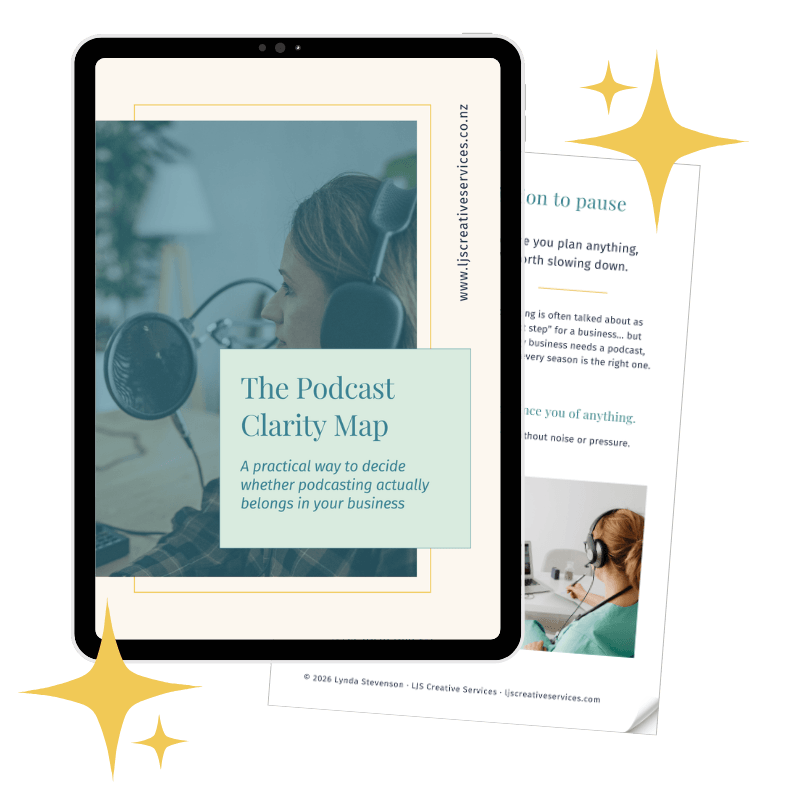
If you're still working through your podcast idea, start with the Podcast Clarity Map.
It's a short guided workbook that will help you identify your topic, audience and purpose before you invest time and money into launching a show.
Get the Podcast Clarity Map for $7 usd.
Still wondering whether a podcast is right for your business?
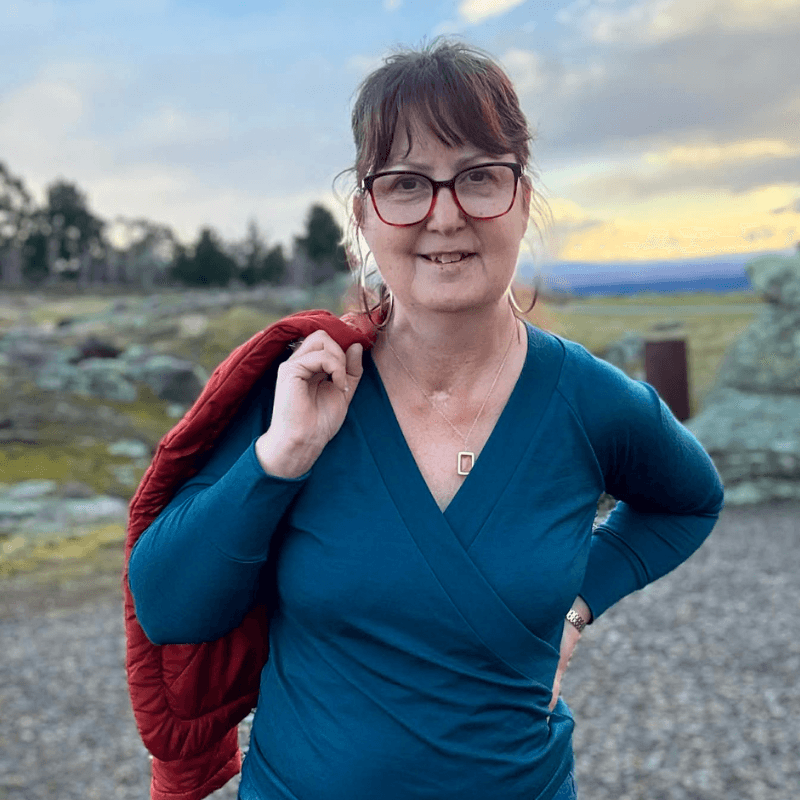
Hi, I'm Lynda.
I've worked with enough podcasters to know that starting a podcast isn't the hard part.
Keeping it going is.
These resources are designed to help you make good podcasting decisions before you invest time, money, and energy into launching a show.



©LJS Creative Services 2026 | Designed By Zestful Media & Design
Supporting podcasters in New Zealand, Australia, the US and beyond.
Podcast Quiz → Is your business ready for a podcast?
Blog| Podcast Resources | Terms and Conditions | Privacy Notice